
The conversation that shapes us.
Concept Shopify store for an Indian intimate-care brand: period care, hygiene and comfort, sold by life chapter, with a quiz that recommends the right product
The brief
māsi is an Indian intimate-care brand for period care, hygiene and comfort. Its customers are women at every chapter of life, and many have never been taught to talk about their bodies. Shopping for these products is often private and sometimes uncomfortable, so the store had to feel like a trusted older relative rather than a pharmacy aisle. The site was first designed as a hand-coded HTML experience and then rebuilt as a custom Shopify theme, so every product, order and payment runs on Shopify while the design and voice stay exactly as designed. The store is in its final pre-launch stage on Shopify on its own domain, masicare.co, so it opens on a password page until launch: the password is 1.
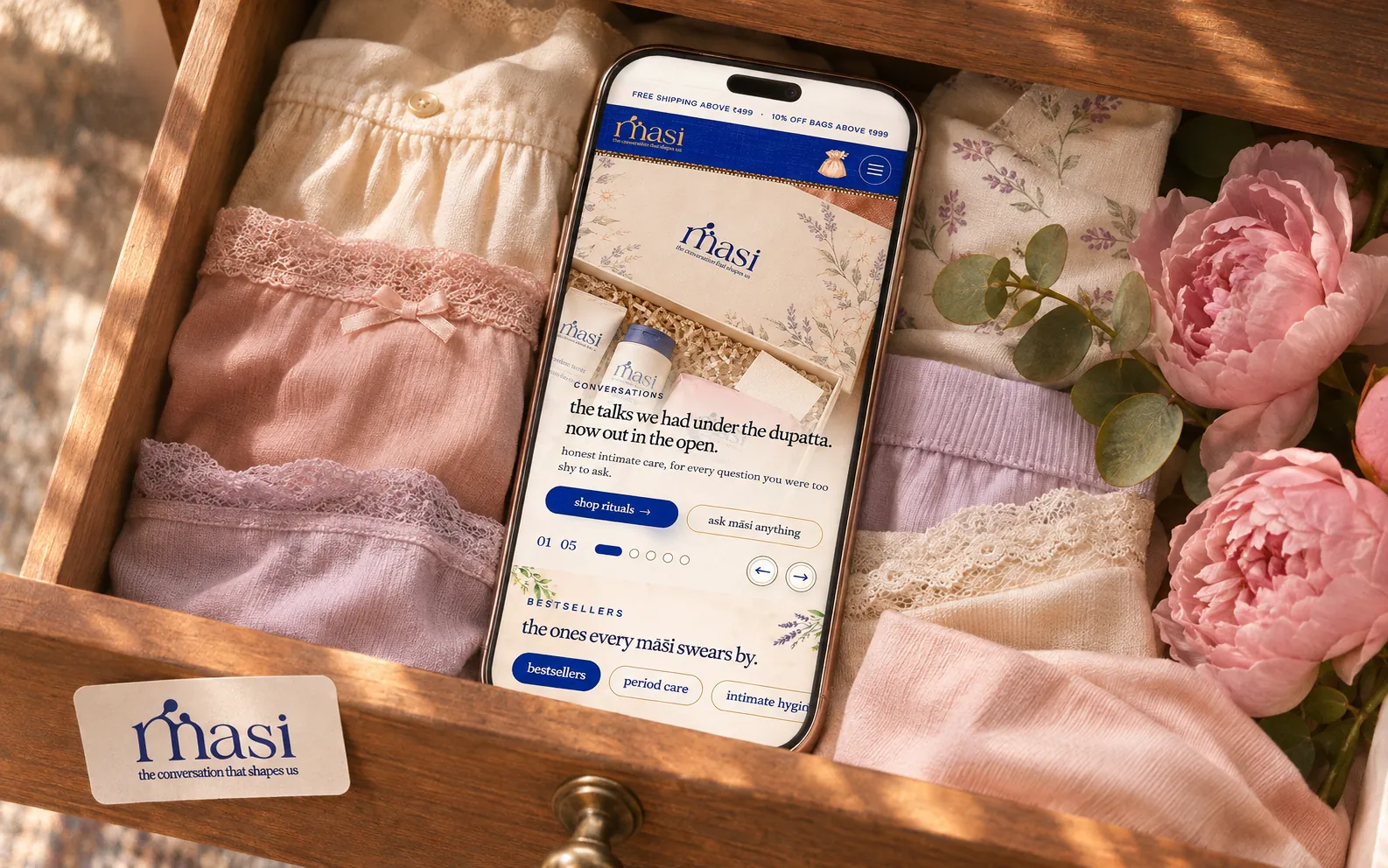
No more wrapping it in newspaper.
In numbers
- products in the catalogue
- 15
- ritual bundles
- 5
- product page templates
- 7
- journal articles
- 6
What: period care, intimate hygiene and comfort, sold as kits and rituals
How: a warm, plain-spoken voice, a quiz instead of a filter panel and shopping by chapter of life
Who: girls, mothers, busy women and the wise years, and the people who gift to them
Interactions
Ask anything. We will not tell a soul.
Decisions
A conversation instead of a catalogue
The quiz, the journal and the whisper form give a shy customer three ways to ask for help without saying a word aloud. The shop is secondary to the conversation.
Chapters of life as the structure
First time, busy years, becoming a mother and the wise years: each chapter has its own page, products and tone, so the store never shows a girl and a grandmother the same thing.
Warm, crafted and never clinical
Indigo, saffron and cream, a zari border, jasmine and lavender. The palette and details feel familiar from home, which takes the embarrassment out of the subject.
Native Shopify, fully editable
Products, cart, checkout, accounts and policies are Shopify's own, and every piece of content is a theme setting, so the brand owns the store without needing a developer.
Details
- The quiz reads the live catalogue, so renaming or adding products in Shopify changes its recommendations automatically
- Every number in the bag comes from Shopify's cart; only the shipping estimate uses a theme setting
- Translations and pop-up text are decoded safely so apostrophes and bold text display correctly
- Menus, footer links and policy links fall back to working defaults, so an empty menu never leaves a dead link
- Pages are tied to page templates, so a new page can reuse the design of any existing one
- Sliders support drag with the mouse and swipe on touch screens, and florals respect the reduced-motion setting
Development note
- A hand-coded design, rebuilt as a real theme
- The original HTML site was converted into Liquid sections and JSON templates with the same design, so the theme editor can change any text, image or link and Shopify handles products, cart and checkout.
- A quiz that cannot return nothing
- The recommendation engine prefers a ritual bundle, then a matching kit, then a concern-specific product, then any available product, so every visitor gets an answer even in a store with a small catalogue.
Built with
How it’s built
Shopify (custom Online Store 2.0 theme)
Your platform, your choice
Designed once, built on the platform you sell.
Every design here can be built on the platform your client already uses, and fully working: product pages, cart and checkout, forms, bookings and an editable CMS. Motion and effects are adapted to what each platform supports, so nothing breaks after launch.
- Shopify (Liquid)
- WordPress + Elementor
- Webflow
- Framer
- Wix
- React / Next.js
- Custom PHP (Folio)
 Next case studyMateo LaurentThirty years of practice, cut like a film.
māsi
A custom Shopify store for māsi, an Indian intimate-care brand. A five-story hero, shop-by-chapter navigation, fifteen products and five ritual bundles, seven product templates, a chat-style recommendation quiz, a slide-out bag with live shipping and offer progress, thirteen content pages and a six-article journal. The store is in its final pre-launch stage on Shopify on masicare.co: enter 1 as the password.
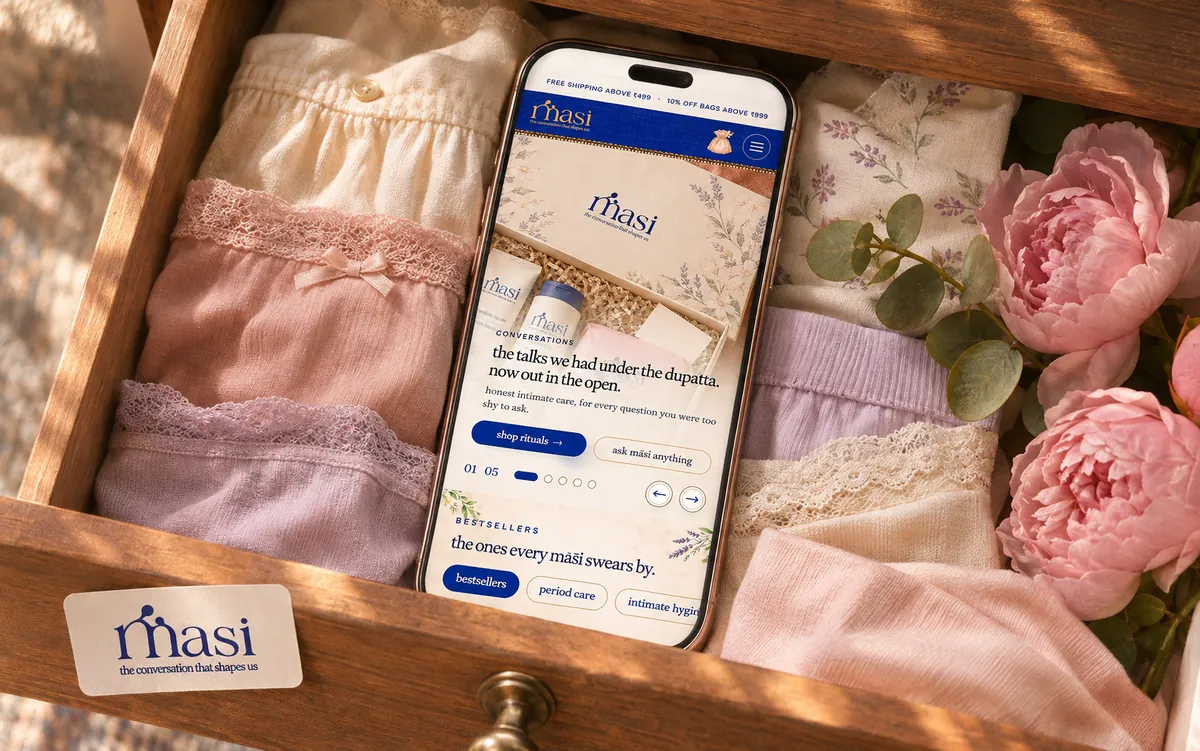
- A custom Shopify Online Store 2.0 theme, fully editable from the theme editor
- Shop by chapter of life, not by catalogue
- Ask māsia chat quiz that recommends a real product or kit
- Ritual bundles that add a three-step routine in one tap
- A slide-out bag with live free-shipping and offer progress
- TypeSelf-initiated concept, live on its own domain
What we did differently
Build the store the way the brand speaks: warm, plain and a little protective. The design borrows from Indian textiles and gardens, with indigo, saffron and cream, a zari border and soft florals, so a sensitive subject feels familiar. The structure follows how women actually decide: by the chapter of life they are in, helped by a quiz instead of a filter panel. Under the surface, everything is native Shopify, so the team can sell, ship, run offers and edit content without a developer.
Want this level for your client?
White-label or credited. Send the brief and I’ll reply within a day.